The difference lies in the detail and the soul of the object.
I do have my favorite basic shapes, but in the end I dedicate myself to creating unique pieces.
Making a real series is nothing for me. Every pipe should have something of its own! That is
exactly what makes this craft so special to me. The joy lies in creating a new or slightly
different shape again and again. And it fits the nature of the material itself. Especially briar
wood shows its own natural story in every grain and in every piece.
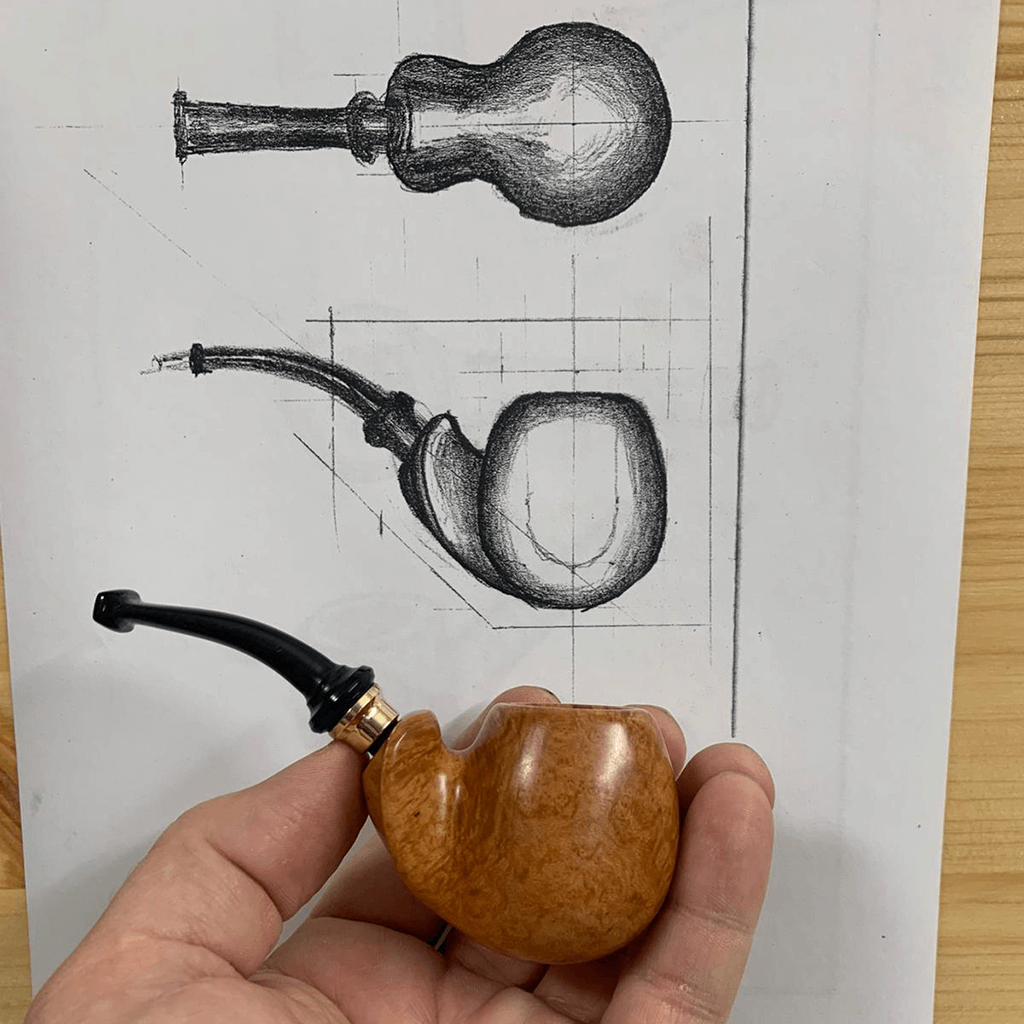
For me, everything begins with an idea. Sometimes it appears suddenly: from a cloud in the sky,
a special piece of wood found on a walk, or simply while looking at the briar blocks waiting
patiently on the shelf.
No pipe is like another. Every grain speaks for itself. And that is exactly how it should be.
Tradition, for me, means not just practicing a craft, but truly living it, with respect,
patience, and real dedication.
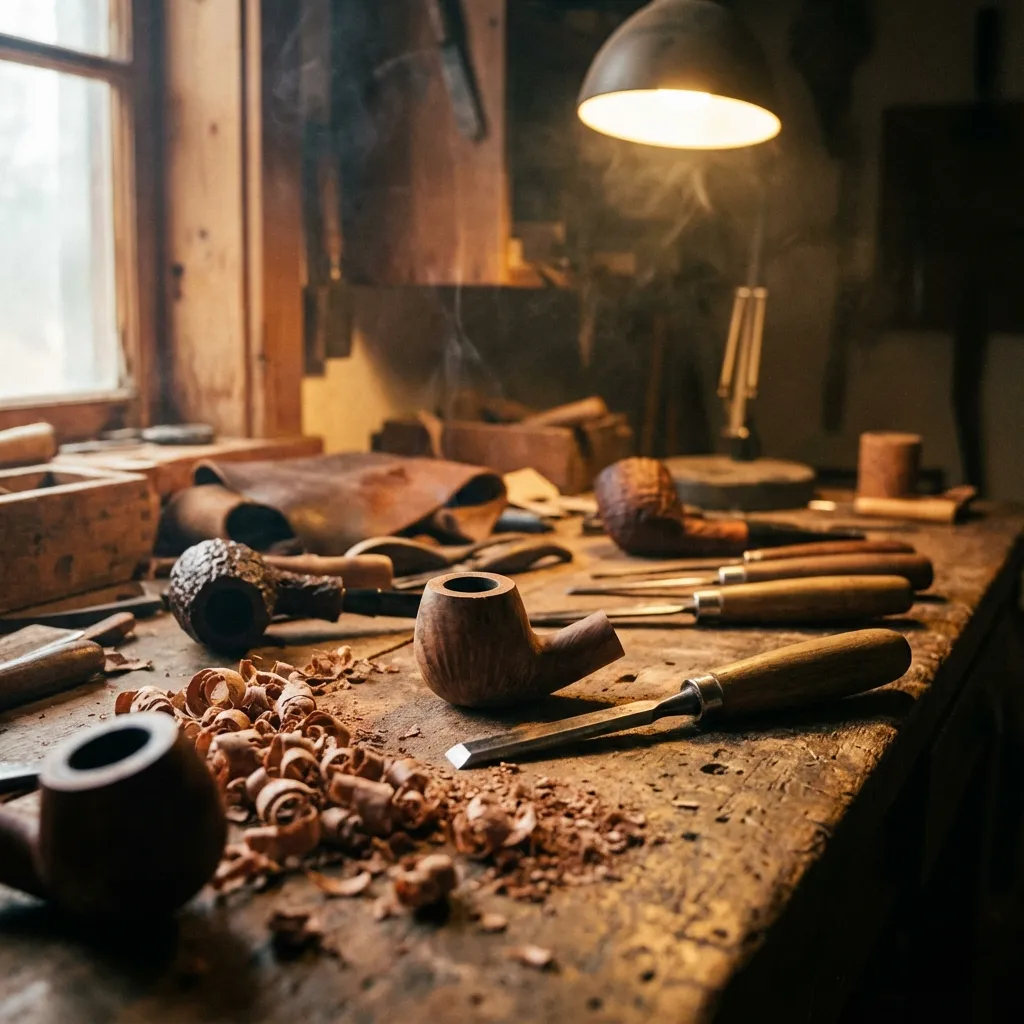
In the making of my pipes, only a few machines are used. Most of the work is done by hand, using
old techniques that I was fortunate enough to learn and that I still value
deeply*.
* At this point, a quiet and grateful bow to my friend and teacher, Horst
Nuss.
For me, quality is the thread that holds everything together, from the first idea to the design,
the choice of materials, and the way a piece is crafted. Even the best wood means little if the
work is not done well. And a good design only works when it truly serves its purpose. In the
end, all three things must come together: material, design, and craftsmanship.
That is why I work only with first-class materials. When I build a pipe, the outer shape and the
inner structure belong together. The look of a pipe is important, but its inner design also
plays a major role in how it smokes.
If someone enjoys holding one of my pipes for a while after smoking it, then I know I have
reached my goal.
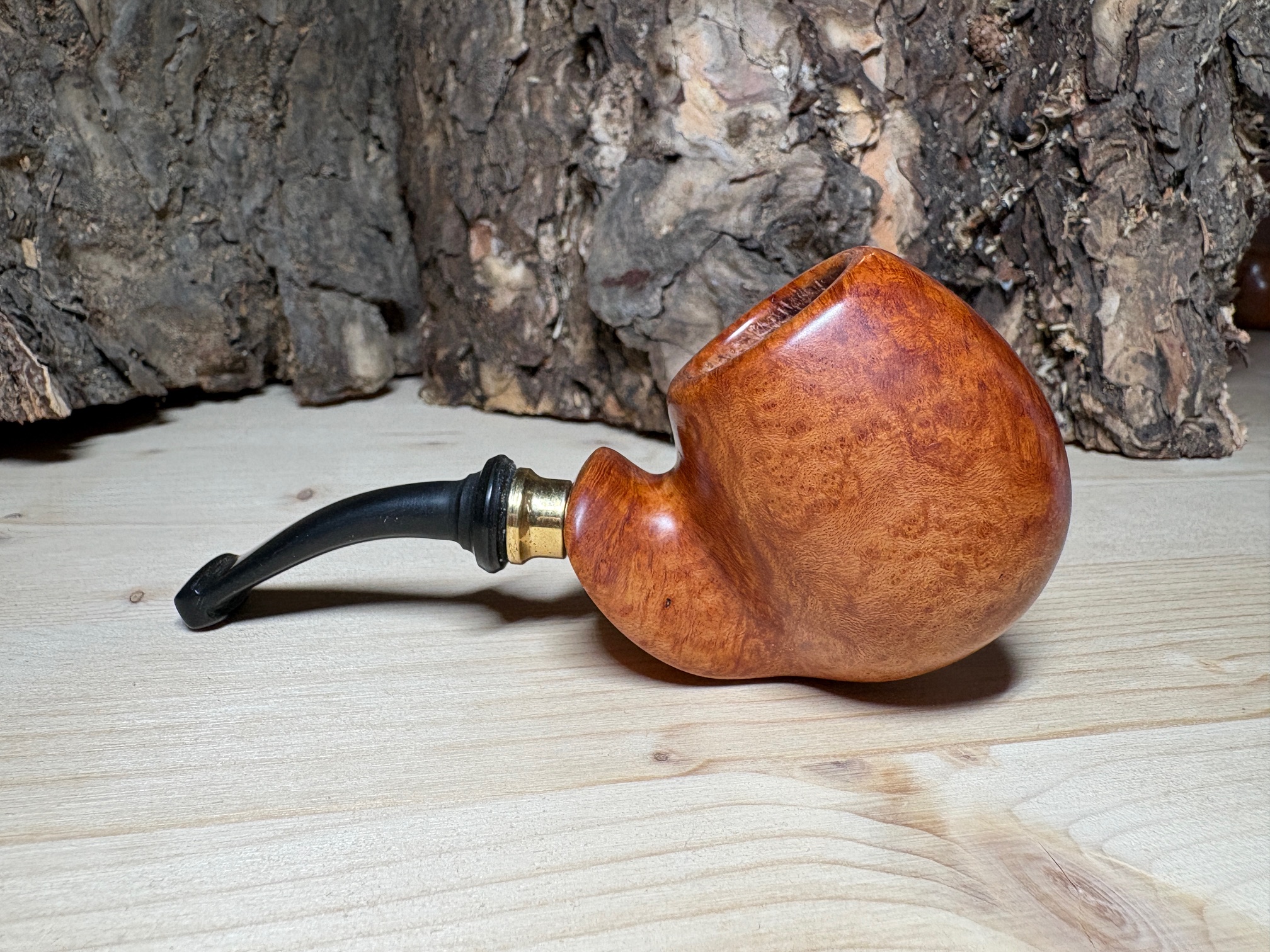
Holding a wooden pipe in your hand means touching a piece of nature that has grown for decades.
Briar wood, in particular, needs around thirty years before it can even be used for a pipe. This
alone fills me with a certain sense of respect for the material.
I choose every piece of wood very carefully, but sometimes I still have to let go of blocks that
are not suitable. One of my guiding principles, shaped by this deep appreciation for the wood,
is simple: I do not use filler. If a small natural mark appears during the work - something that
does not harm the quality, the shape, or the look of the pipe - then it may stay. It becomes
part of the pipe’s character.
In the end, it is and always remains a piece of nature. Shaped by life, by time, and by many
influences that have left their traces in every part of the wood.
 OWS Pipes